Nicolette Kavouras, Author at South Sound YMCA - Page 4 of 4

By: Brad Hankins

Many of us with a few miles on the odometer of life haven’t gotten here unscathed.  As grateful as we are to have reached this number of years old, accidents, emotional stress and routine physical wear and tear can combine to limit the way we want to live our life.  This month we look at improving chronic health conditions, specifically Metabolic Syndrome.

The combination of Type 2 Diabetes, high blood pressure and high cholesterol are the chronic health conditions that make up Metabolic Syndrome (MetS).  Also, in my Nursing opinion, there is often a fourth accompanying component, depression.  Up to one third of Americans have MetS, with that number increasing each year, and because the symptoms of MetS are slow to appear many are not aware of their worsening health.  Outwardly MetS symptoms are somewhat limited to increasing body weight and waist size, though waist size is not a direct indicator of MetS nor its independent factors.

The prevention of MetS include maintaining a healthy weight (as measured by percent of fat mass and skeletal muscle – not BMI), regular exercise, an active life, a reasonable diet, successful stress management and making time for yourself to enjoy those things you enjoy.  MetS prevention is a team-based endeavor involving a positive relationship with your healthcare provider and clear, honest communication with your family.

If you have MetS, you can improve your health, both physical and emotional, with an informed gameplan and disciplined approach.  If there is a good thing about MetS it’s that an improvement in one of the four component medical conditions will also improve the other three.  The best first place to begin is with your healthcare provider for testing and perhaps the prescribing of medications to improve symptoms while developing a plan to lessen the overall impact of MetS.

Typically, the next step is weight reduction via diet and exercise, which will bring with it an across-the-board MetS improvement.  The approach to dietary change, in my opinion, should first begin with an honest appraisal of what you are currently eating, which can be done with the help of a diet tracking app such as MyFittnessPal.  Next would be a change in calorie intake while improving, to toleration, the nutritional content of the types of food you currently enjoy.

Per an earlier column, exercise should be considered in the combined approach of cardio, weight training and movement practices.  Cardio can simply begin with walking 20 minutes a day, three times a week.  Weight training is best explored with the help of a South Sound YMCA trainer to help develop a safe, enjoyable training plan which will increase both strength and stamina.  Movement practices include Yoga, Palates, Tai Chi, dance and/or court sports such as pickleball and basketball, most of which are available at your local South Sound YMCA branch.

MetS prevention and the improvement of developed MetS are similar, weight reduction, regular exercise, reasonable diet and stress reduction/management.   The programs, staff, instructors and trainers at SSYMCA are all available to help you in your MetS journey.  We hope you will consider SSYMCA as part of your care team and we look forward to supporting you as you improve your health and wellbeing.

I would enjoy hearing about your wellness journey, please feel free to email me at hankinsb@ssymca.net.

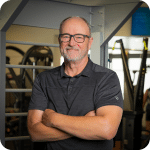
Brad Hankins RN, CPT
 

By: Brad Hankins

With Fall approaching this is a perfect time to discuss the third part of the fitness triad, movement.  As you may recall from previous months, weightlifting/resistance training, cardio/aerobic and movement are the three components of a well-structured fitness program. Combined, the three practices provide synergy leading to increased strength, stamina and marked improvements in both physical and psychological reserves.

Movement means any exercise activity which causes physical motion, then stops or changes the direction of that motion.   The motion can be slow and purposeful, as in Yoga and Tai chi, or fast and quick like court sports such as pickleball and basketball.  The results are improvements in balance, coordination and strength across multiple muscle groups. Where resistance training and cardio we are targeting specific muscles and body systems, movement brings those efforts together in a dynamic way.

If you have a chronic health condition always consult your medical provider before beginning any exercise program.

The programs, classes and lessons at your SSYMCA branch offer a wide variety of movement choices. And with a variety of activities to choose from, you can mix them together to keep you interest and challenges peaked.  For instance, your choice may reflect an interest in improving balance, something all of us regardless of age can work on.  Or maybe you have a desire to increase muscle strength via low impact exercise.  Interestingly, both things (and other gains such as flexibility) can be found in Yoga.  Tai chi offers similar fitness improvements, and both offer improved sleep, lower blood pressure and a better performing immune system when performed regularly.

If speed and agility are your targets, consider pickleball.  A sport born in the Pacific Northwest, on Bainbridge Island to be exact, pickleball can be as intense or relaxed as you and your playing partners choose.  This sport will challenge your abilities to make quick movements with multiple forward, backward and lateral movements often occurring in the same volley.  Flexibility, speed, hand-eye coordination and stamina are the names of this game. All three SSYMCA branches have scheduled open pickleballs sessions with lessons offered at our Olympia Branch.

The most universally loved movement exercise is dance.   Embraced across all cultures and societies, dance is a not only an expression of the human experience but an exercise that wraps balance, coordination and strength into a fun, enjoyable package.  From an exercise perspective the type of dance is not as important as the benefits from sustained movement and the changes in direction and tempo dance brings. Pick your music, your partner (or not) and add this movement to your day, or night, or work -just make sure your air pods are connected before your fellow workers experience Led Zeppelin at 110 decibels.

Movement is an important part of fitness and overall enjoyment of life.  Please let us know how we can help you pick a movement program, or two, to try at your local SSYMCA.  Some programs require registration, some don’t, and we are happy to help you navigate signups and a class time that best fits your day.

I would enjoy hearing about the success and challenges of your fitness journey.

Please feel free to email me at hankinsb@ssymca.net

Brad Hankins RN, CPT


By: Brad Hankins

This month we will begin exploring the three primary fitness practices which together make the foundation of fitness.  The practices are cardio/aerobic exercise, resistance (weight) training and body movement. Body movement being any activity causing changes in direction, position and speed e.g. yoga, pickleball, dance, basketball, tai chi etc.

This month let’s examine the most familiar of the three, cardio/aerobic which has been at the forefront of modern fitness since the 70’s and early 80’s.  Who knows, you might have a dogeared copy of Jim Fixx’s book Running in the attic or still occasionally rock that hot pink headband from those VCR work outs with Jane Fonda.  Cardio has been a fitness staple, and financial success, for decades.

The two most common cardio questions I get from clients are 1) do I really have to do this and 2) how much is enough? The answers are yes, and it depends. The yes is based on years of empirical clinical evidence indicating aerobic exercise is the single best modifiable factor in the prevention of, and recovery from, cardiovascular disease and other chronic health conditions. The it depends is directly related to your current level of fitness and desired goals. Of this there is no debate, the path to physical health goes through the crucible of cardio.

If you have a chronic health condition always consult your medical provider before beginning any exercise program.

Cardio exercise is any movement which increases heart and breathing rates, and sustains those elevated rates over time.  Aerobic (the terms cardio and aerobic are interchangeable in the exercise vernacular) means the movement is sustained long enough your body begins using oxygen as one of its energy sources.  The movement can be walking, running, biking, swimming – any movement using large muscle groups.  The good news is most everyone has the equipment to begin walking for exercise, a great cardio practice.  Essentially a pair of comfortable shoes with good support, a selection of pants/shirts/jackets, and in our area a raincoat is all you need.  And a dog if you have one, dogs need cardio too.

Treadmills, exercise bikes and elliptical machines are great to help focus your aerobic activity.  Your favorite branch of the SSYMCA has a selection of cardio equipment and staff to help with machine set up and review basic walking or peddling instructions.  Then there’s swimming, which is both an aerobic and resistance exercise.  Your local Y has a pool, or pools, available for lap swims as well as instructors and classes.  With these resources available weather is not an excuse to avoid increasing heart rate and respiration.

A good initial time goal is 20 minutes of sustained movement that increases both heartrate and breathing, three times a week. However, if five or ten minutes is your beginning exercise limit, that’s great – the important thing is you have made a commitment to exercise regularly!

When a 20-minute goal is reached then begin working toward a 50-minute goal by slowly increasing exercise time 10% per week, but do not exceed a 5 minute increase at any given time.  In the beginning, exercise duration is more important than intensity.  In other words, first increase your time on the treadmill, not the incline.  When you get to 50 minutes, then experiment with incline.

Measuring exercise intensity can be done either by monitoring heart rate or breathing difficulty.  Self-heart rate monitoring can be tricky when walking outside, however most cardio equipment at the SSYMCA branches have heartrate monitors built into the safety bars.  Safe exercise heart rate ranges by age can be found at the American Health Association website: https://www.heart.org/en/healthy-living/fitness/fitness-basics/target-heart-rates.

Breathing rates are best gauged by the ability to speak in full sentences when exercising.  In other words, you do not want to exercise to the point of gasping when talking. Your exercise buddy can help monitor your breathing or simply ask yourself if someone asked me a question right now, could I answer in a full sentence?  If you find yourself unable to respond in a full sentence simply slow your exercise speed, but don’t stop exercising. Then give yourself two to three minutes at the new exercise speed and reassess your breathing.

Cardio exercise is critical to health improvement and necessary to reach new fitness levels.  However, it doesn’t have to be intimidating and can be an enjoyable practice, regardless of age.  Please let us know how we can help add a cardio exercise practice to your fitness journey.

If you have questions or would like to share your fitness journey, please email me at hankinsb@ssymca.net.

Brad Hankins RN, CPT


By: Brad Hankins

For a lot of us discipline has been both our friend and nemesis for decades. We could not have successfully raised families, enjoyed lifetime relationships, or built sound finances without discipline.  However, to get us there we first used willpower, not unlike kindling to a campfire.  Longevity, with a high quality of health and life, is willpower fueled discipline, but not necessarily the willpower/discipline combination we knew when we were younger.

Later life discipline is an act of exploration and experience.  There are hobbies, sports and challenging adventures we want to experience, but never had the time.  There are places we want to visit, perhaps since childhood.  We have new things to do and see and the simple desire to explore and experience can blossom into a love of the new and unknown.  This desire to fully experience the gift of longevity is sustained by exercise induced good health, which helps us both physically and emotionally.

Woody Allan reminds us that 90 percent of life is showing up. Exercise is the same.  Only twenty percent of Americans have a gym membership, according to Exercise.com, while just 20 percent of that 20 percent make it to the gym at least three times per week. This means only five percent of Americans go to a gym on a beneficially regular basis. Five percent is a pretty elite group.

Many among these active five percenters have benefited greatly from discipline, willpower, and patience. Patience both with themselves and the fitness process, a formula proven to work with time. However, they first used their will power to focus inward and slowly fuel their discipline infused exercise journey.

Using willpower and discipline you may find many skills and talents—accrued over your lifetime—will reappear making life, and new experiences, once again seem limitless.

I would enjoy hearing about the success and challenges you find along your fitness journey.  Please feel free to email them, along with any questions, to me at hankinsb@ssymca.net.


Brad Hankins RN, CPT


By: Brad Hankins

As I write this—at near 70 years of age—a 60-year-old man can expect to live to age 81. A 60-year-old female to 84.  That’s according to the Social Security Administration, who, I think we can be assured, keeps a close eye on these things. In contrast, the University of Washington, ever the optimists, predict we may see possible life spans of 130 years within this century.

This increase in lifespan will be driven by continuing improvements in medical diagnostics, genetic research, and pharmaceutical discoveries. However, considering the time it currently takes to see a doctor, you may be 130 before you can explore these possibilities.

A headline caught my eye last week. As older Americans, we can expect just one healthy birthday after age 65, according to The World Health Organization. On the other hand, the healthy-birthday-loving people at the Centers for Disease Control tell that same 65-year-old they can expect nearly 2 more decades of good health.

What are those of us in our 60’s, 70’s, and beyond to think of this academic and statistical conflict? The mixed messages can feel overwhelming. Should lifespan be studied? By all means. Should predictions of how long we live put limits on how we live our life? Not in the least. Regardless of age, we can live inspired lives, on our own terms.

In my own life journey, I have found several thinkers who sum this up well. Psychoanalyst Erik Erikson pits integrity against despair as two opposite poles tugging at us in later life.  Similarly, author Maria Popova believes most of us dwell in a land between cynicism and hope. Both ideas describe a wonderful space to explore life, especially when we now have the time, wisdom, and patience to do so.

As a nurse and a personal trainer at our YMCA, I work primarily with older individuals. When we train together, I find we share similar concerns and hopes about aging well. Those interactions with members inspired this column.

Each month, we will discuss different aspects of longevity. In June, we will explore how exercise not only increases life span, but more importantly, affects our quality of life. I would enjoy hearing your questions, thoughts, and experiences. Please feel free to write me at hankinsb@ssymca.net.

Brad Hankins RN, CPT